Correct prominent or asymmetric ears with minimal, discreet surgery.
Procedure Overview
Otoplasty corrects protruding, asymmetric, or abnormally shaped ears. Dr. Matwa reshapes the cartilage through small incisions hidden behind the ear, setting the ears closer to the head or correcting the antihelical fold to achieve a natural, balanced appearance.
The procedure is suitable for both children (from age 5-6 when ear development is largely complete) and adults. In children, the cartilage is more pliable, which can make reshaping more straightforward. In adults, the technique is adapted to account for firmer cartilage, but the outcome is equally excellent.
Both ears are typically addressed simultaneously to ensure symmetry, even when only one ear is the primary concern. Dr. Matwa plans the degree of setback and antihelical reshaping carefully for each patient to achieve a natural, symmetrical result that does not look over-corrected or operated.
Schedule a Consultation
Why Patients Choose This Procedure
The goal is ears that sit naturally against the head without looking pinned or artificial. Dr. Matwa preserves the natural contours of the ear while correcting the degree of protrusion.
All incisions are placed in the natural crease behind the ear, making them essentially invisible once healed. There is no visible scarring on the front of the ear.
Differences in ear projection, shape, or size between the two sides are addressed in the same procedure to restore symmetry and balance to the face.
Otoplasty results are permanent. The reshaped cartilage retains its new position over the long term, with no need for revision in the vast majority of cases.
Prominent ears can be a source of self-consciousness, particularly in children. Otoplasty provides a definitive, long-term solution that significantly improves confidence and quality of life.
Most patients return to normal activities within 1-2 weeks. Children can return to school within 7-10 days. A protective headband is worn at night for 6 weeks to protect the result.
How It Works
Dr. Matwa evaluates the ears, assessing the degree of protrusion, cartilage structure, antihelical fold development, and symmetry. The optimal technique and degree of correction are planned during this detailed consultation.
A small incision is made in the natural crease behind each ear, providing full access to the ear cartilage while ensuring no visible external scarring.
The cartilage is reshaped, scored, or sutured as required to create or deepen the antihelical fold and reduce the overall protrusion. The technique is tailored to the anatomy of each individual ear.
Incisions are closed with fine sutures and a protective head dressing is applied. The dressing is replaced with a soft headband after the first week, worn at night for six weeks.
Founder & Lead Plastic Surgeon · KMPDC Licensed


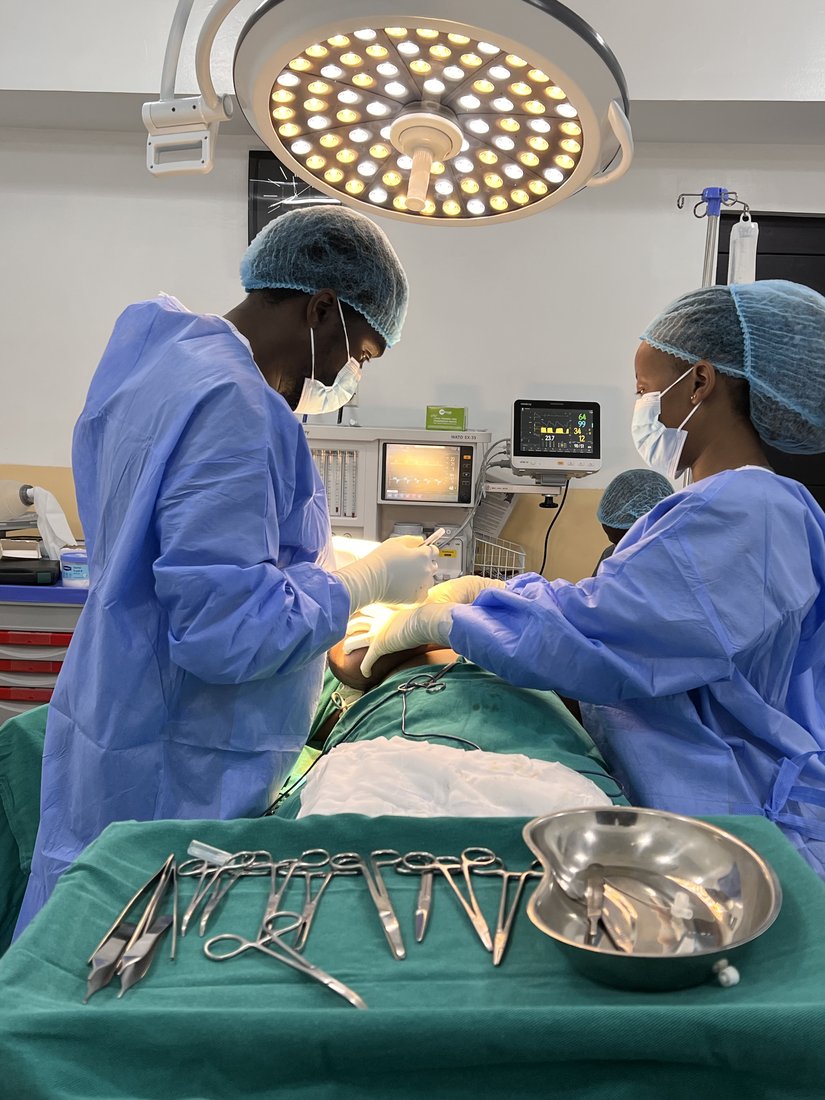
Photos from Dr. Matwa's practice. Shared with patient consent.
What to Expect
Protective bandage covers both ears. Some discomfort and tightness are normal, managed with prescribed analgesia. Rest at home with the head elevated.
Dressing is replaced with a soft headband. Sutures are checked. Most patients return to desk work and non-strenuous activities. Children can return to school.
Daily activities resume fully. Headband worn at night only to protect the result during sleep. Avoid contact sports and activities that could impact the ears.
Swelling has fully resolved and the final ear position is stable. Scars behind the ear fade significantly. Normal sporting and social activities can be fully resumed.
Common Questions
Schedule a private consultation with Dr. Matwa Christopher to discuss otoplasty and what it can achieve for you or your child.
We are expanding into more surgical specialties at Truffel Healthcare Kilimani. Stay tuned for updates.
Get notified →